When Breastfeeding Works: How to Tell Your Baby Has a Good Latch

Imagine biting into a big sandwich. You’d want your mouth to be open really wide to get a big bite! Similarly, we want your baby’s mouth to open wide to get the nipple and a lot of areola into the mouth.
This post is part of our breastfeeding series, written in collaboration with Lauren Walker, Certified Lactation Counselor and owner of The Childbirth Circle. Check out other posts with the ‘breastfeeding’ tag.
Welcome to the second part of our breastfeeding series! In our recent blog post, we covered breastfeeding pain and how to know if your latch needs work. This time, we’re sharing 7 signs of a good latch! Some or all of these things might be true if your baby has a good latch.
Remember that even if your latch looks good, breastfeeding can still hurt. This blog isn’t meant to replace the advice of a professional. If you experience pain during feedings, you should reach out to a lactation support professional as soon as possible to help you troubleshoot and get you feeding comfortably. The Childbirth Circle has two Certified Lactation Counselors on staff who provide in-home and in-office lactation support.
Without further ado, grab a snack, snuggle up with your baby, and scroll through these 7 signs of a good latch.
Good latch sign #1: The corner of your baby’s mouth forms a ≥120-degree angle.
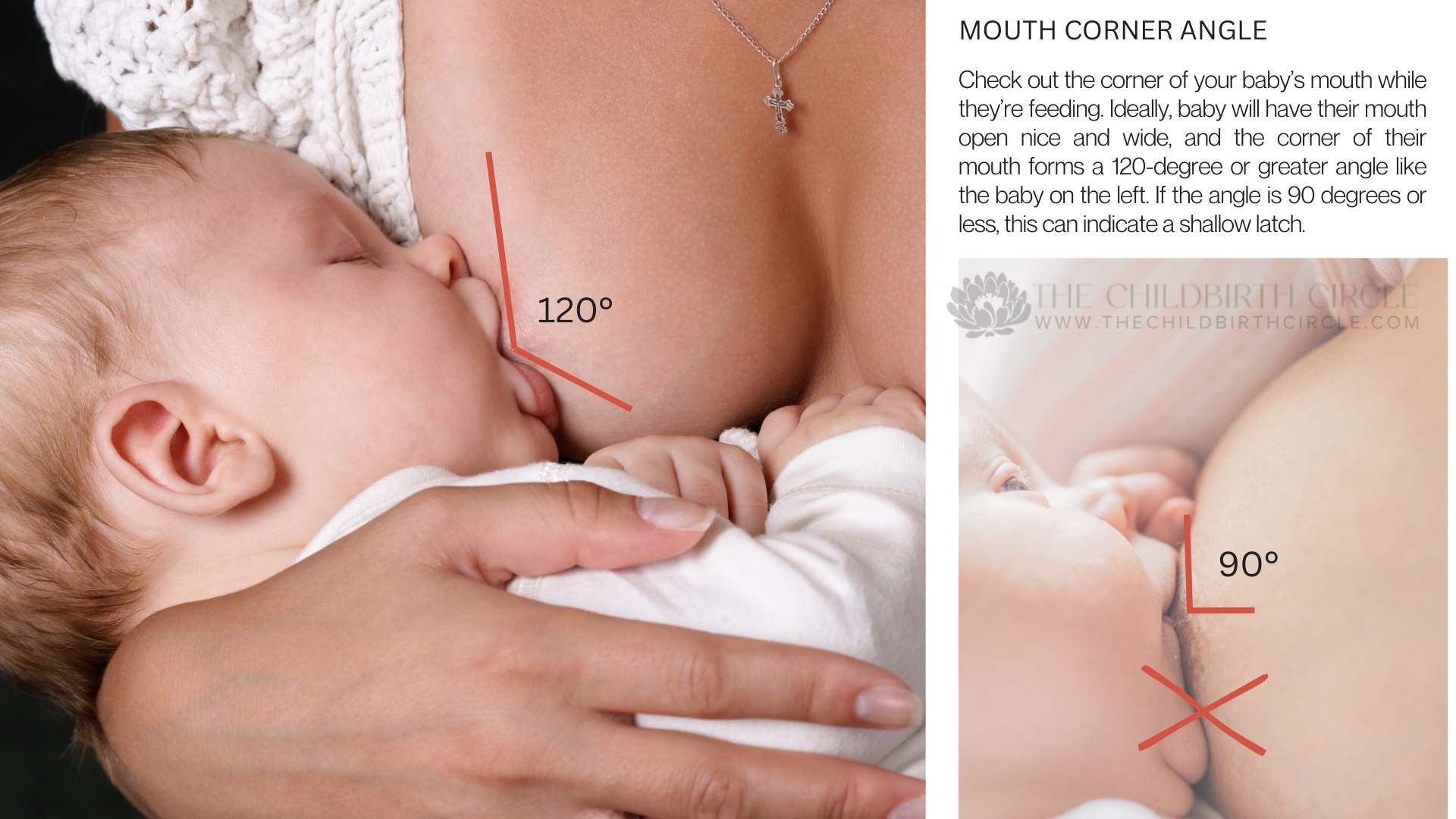
When you latch your baby on, take a look at the corner of their mouth. Is the angle nice and wide, 120 degrees or more? That’s a great sign that your baby is taking a lot of breast tissue into the mouth, forming a deep latch. Does the corner of your baby’s mouth form a 90-degree angle (or smaller)? This indicates your baby has a more shallow latch, meaning the nipple is just reaching the front of the mouth. This can cause a lot of irritation and pain. We want the nipple to be deep in the mouth, touching the soft palate.
Imagine biting into a big sandwich. You’d want your mouth to be open really wide to get a big bite! Similarly, we want your baby’s mouth to open wide to get the nipple and a lot of areola into the mouth.
Good latch sign #2: Your baby’s lips are flanged out.
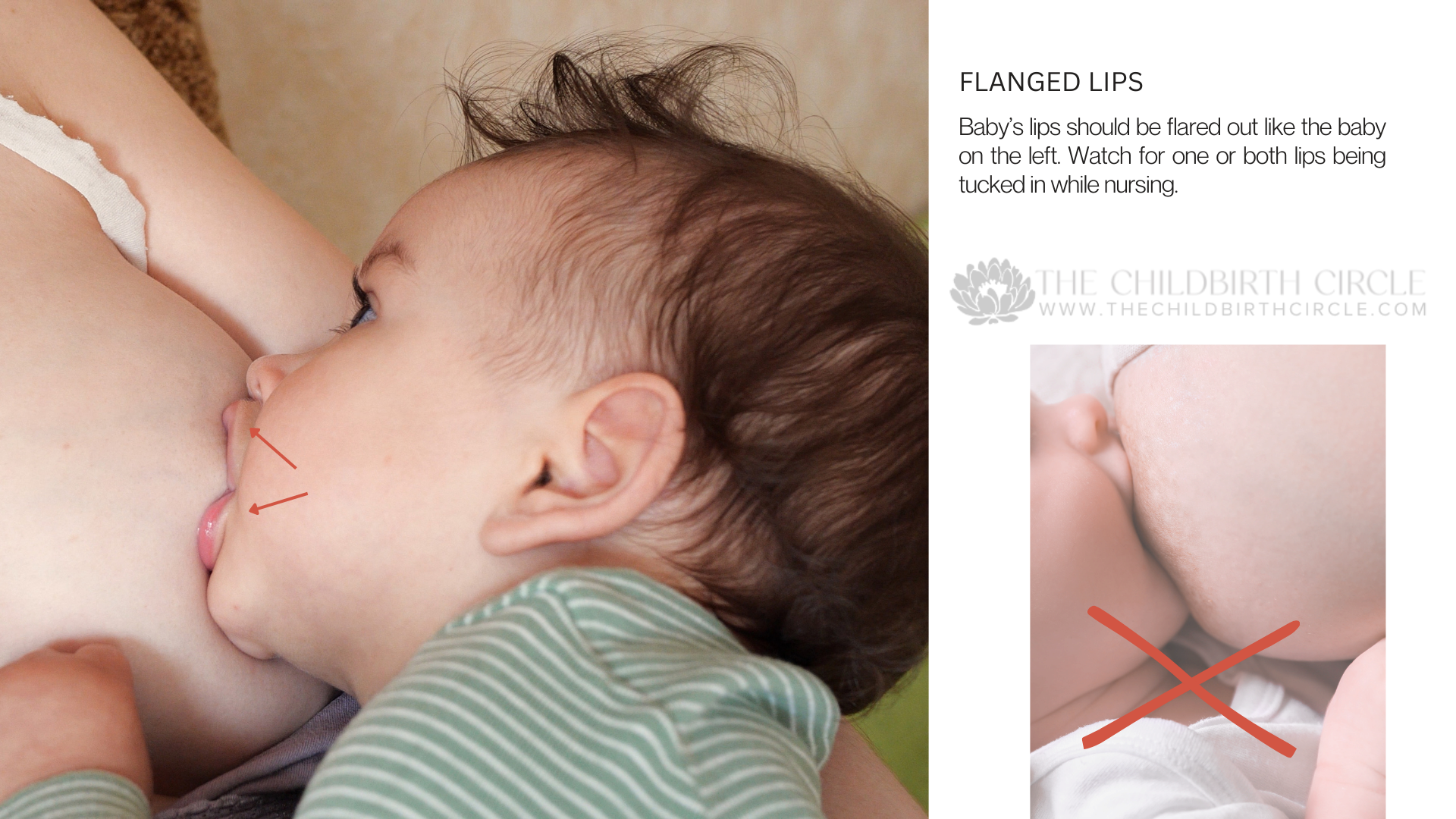
When baby’s lips are turned outward like fish lips, they’re better able to get a good seal on the areola. This means a more comfortable latch for you, and more efficient milk transfer for baby.
Good latch sign #3: Baby’s ear, shoulder, and hip form a straight line.
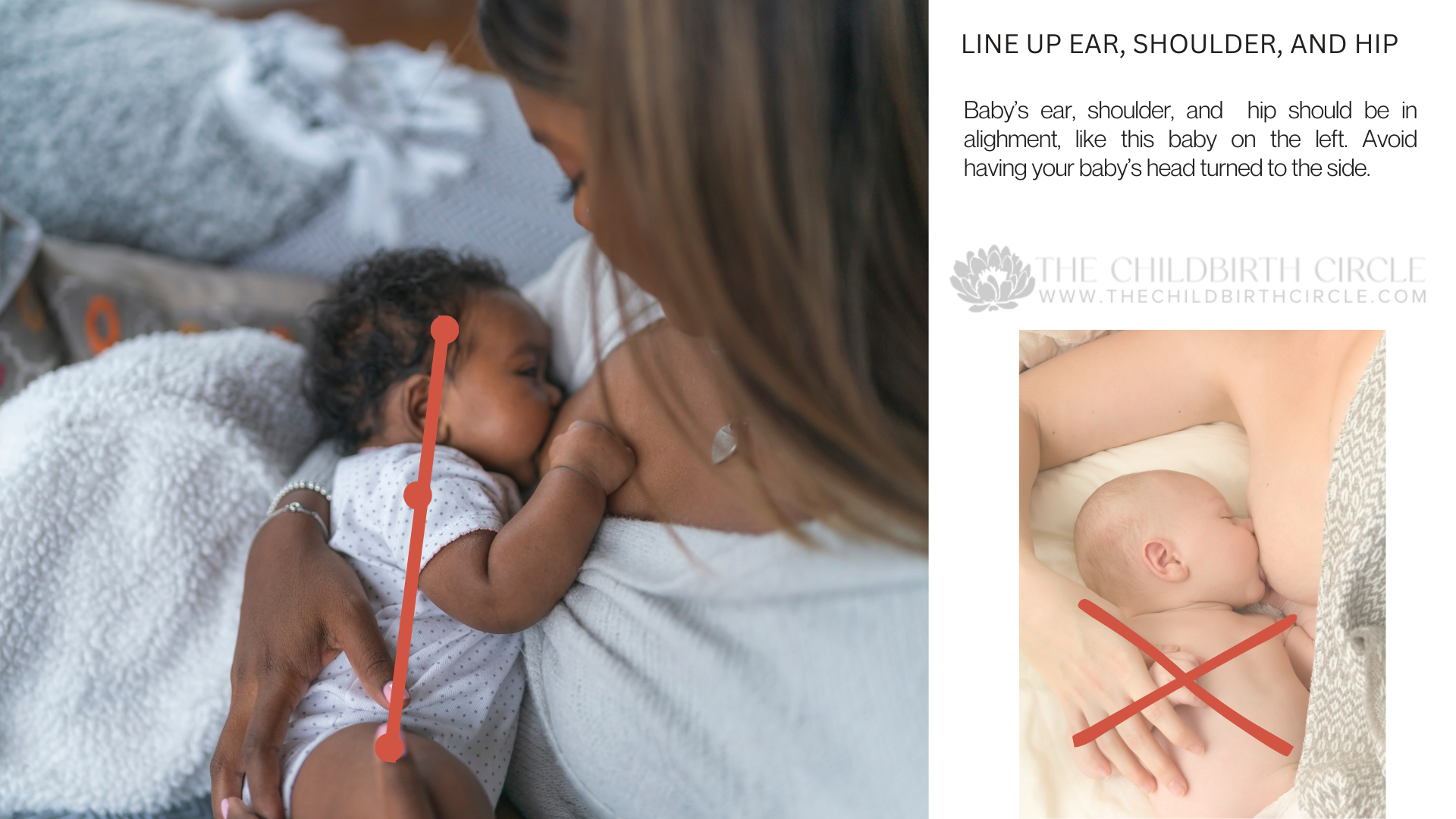
Try this: grab your water bottle, turn your head to look over your shoulder, and take a sip of water. It’s a lot harder to swallow when your neck is turned! This is the same for your baby. None of the muscles involved in feeding can work as well when the neck is turned. For optimal feeding, position your baby with their tummy and chest touching your body. The ear, shoulder, and hip should all be in alignment.
Good latch sign #4: Baby’s chin is touching the breast.

Having your baby’s chin touch the breast helps ensure the nipple is at the proper angle, pointing toward the roof of the mouth. Remember that we want the nipple to reach the soft palate during feeds.
Good latch sign #5: You are NOT experiencing significant pain.

Some pain or discomfort can be normal, especially in the early weeks as your breast tissue is still getting acclimated to feeding your baby. Severe pain or pain that lasts the duration of a feed are not normal. Check out our blog post about breastfeeding pain to better understand the difference between normal pain and abnormal pain.
Good latch sign #6: Baby’s cheeks are NOT dimpled.

Dimpling cheeks are a sign that your baby has a shallow latch, and that they’re sucking with their cheeks instead of moving milk with their tongue. During feeds, we want the tongue to be doing the work, and those cheeks to be soft and squishable!
Good latch sign #7: You do NOT hear any clicking sounds coming from your baby during feeds.

Clicking can be a sign that your baby is losing suction or moving air during their feed. The only thing you should hear while baby is feeding is swallowing.
We hope this guide helped you take a closer look at your latch. Next time, we’ll cover ways to help improve your latch. Stay tuned for more posts from lactation pros — all part of a series to help you find success in your breastfeeding journey.
Remember that your latch can look good but still need work. If you are having pain or problems with breastfeeding, please reach out to schedule an in-home or in-office visit with our CLCs. We are always here to help!